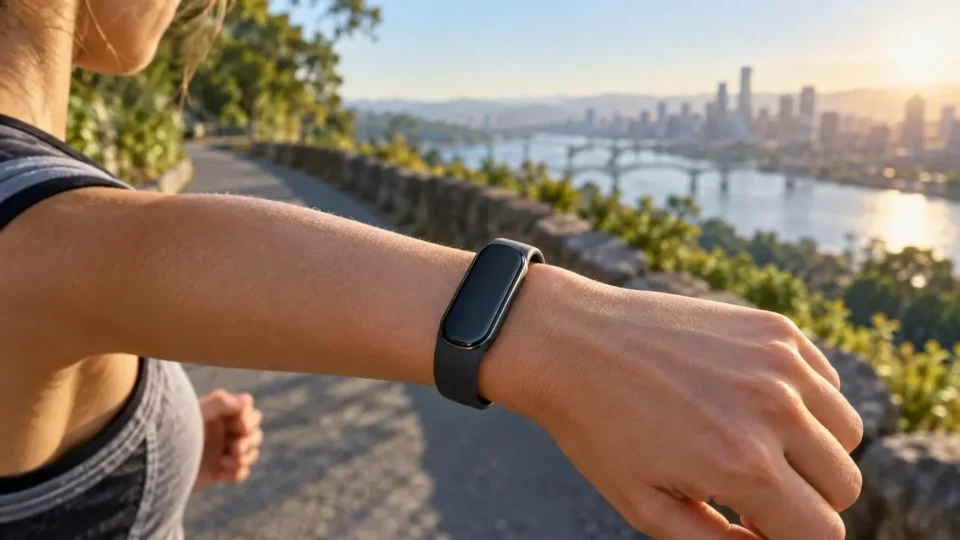
Fitbit Edge battery life is one of the main selling points of Google’s new fitness tracker. The company promises up to seven days on one charge, while positioning the device between a screenless band and a full smartwatch. It also brings a larger Hybrid OLED display, built-in GPS, health sensors and Google Health Coach features.
Fitbit Edge battery life and display
Google says the display offers 46 percent more viewing area than earlier Fitbit trackers and remains readable in bright sunlight. A physical side button provides tactile control during exercise, which can be more reliable than tapping a small screen with wet hands or while moving.
The recycled-aluminum case is 11.5 millimeters thick. Google compares its weight with the Apple Watch Series 12 and says the case is 45 percent lighter, but that is a manufacturer comparison rather than an independent test. Comfort during sleep and long workouts still needs to be confirmed by reviews.
The tracker supports more than 50 exercise modes and can automatically recognize up to 100 activities. Google also claims that built-in GPS tracking is up to 40 percent more accurate than the previous generation. Real-world accuracy will depend on route, buildings, tree cover and how the device is worn.
Health features need careful context
Fitbit Edge combines continuous heart-rate monitoring, sleep insights, skin-temperature tracking and an ECG app where supported. Some Health Guardian and coaching features require Google Health Premium and may not be available in every country. None of these consumer features should be treated as a medical diagnosis or a substitute for professional advice.
Privacy matters because the tracker can collect movement, sleep and physiological information. Buyers should review account permissions, sharing settings, export options and retention rules before enabling every feature. Regional availability and subscription requirements should also be checked before purchase.
Repairability could extend useful life
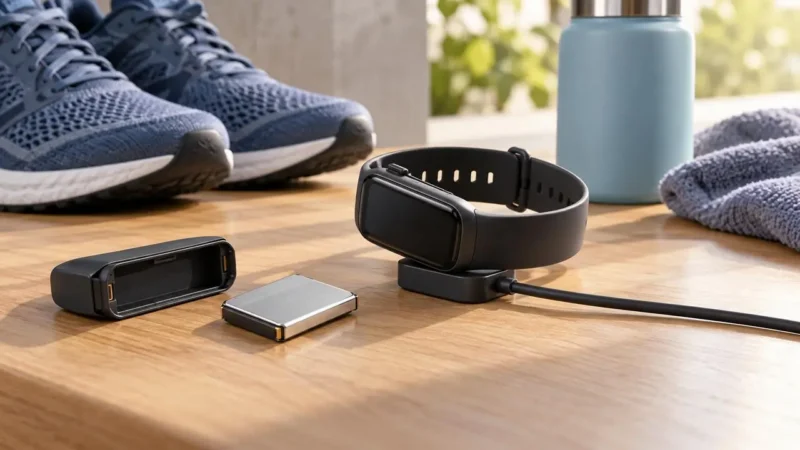
Google calls this its first repairable Fitbit tracker and says the internal architecture includes a replaceable battery. That could extend the product’s useful life and reduce electronic waste, although the practical benefit will depend on parts, service pricing and authorized repair availability in each market.
Fitbit Edge battery life is rated at up to seven days, but enabled sensors, display brightness, notifications and GPS workouts can reduce that figure. Google says five minutes of magnetic charging can provide a full day of use under its test conditions. Independent testing should show how closely retail units match those claims.
The tracker is rated for water resistance to 50 meters, but water resistance is not permanent and does not mean the device is waterproof in every situation. Users should follow Google’s guidance on swimming, drying and exposure to soap, salt water or high-pressure water.
Price and availability
Fitbit Edge costs $179.99 in the United States, with preorders open and retail availability planned for October 27, 2026. It comes in four finishes, while a Stephen Curry special edition costs $219.99. Prices, bundles and service availability can differ by country.
Fitbit Edge battery life, a larger screen and replaceable battery make the tracker an interesting alternative to a full smartwatch. The final judgment should wait for independent tests of sensor accuracy, comfort and battery performance. Official details are available in Google’s Fitbit Edge announcement. For another current device launch, see our vivo NEXT 2026 overview.
Compatibility also matters. Google lists support for most phones running Android 11 or later and Apple iOS 16.4 or later, together with a Google Account, the Google Health app and an internet connection. Buyers should confirm that the required app and every desired health feature are available in their country before ordering.
Fast charging can be useful for sleep tracking because a short top-up reduces the time the device is off the wrist. Battery health over several years and the real cost of replacement service remain unknown, so repairability should be welcomed as a direction rather than treated as a complete guarantee.