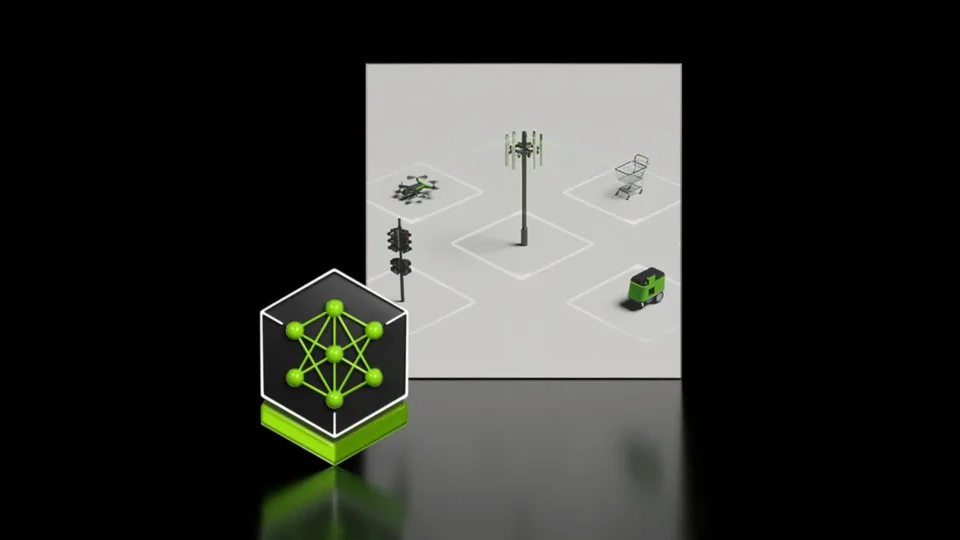
NVIDIA open models for telecom are being positioned as a way for network operators to keep more control over data, deployment and customization. NVIDIA says open-source models and software are important to 89% of respondents in its telecom survey. That figure measures strategic importance, not completed production adoption.
The distinction matters because a model is only one component of a working telecom AI system. Operators still need governed data, evaluation, secure tool access, monitoring and staff who can validate recommendations before they affect a live network.
NVIDIA open models for telecom: five reasons
The first reason is control. Open weights and visible deployment options can let an operator choose where inference runs and which systems receive network information. The second is customization: a general model can be tuned for local terminology, alarm patterns, support procedures and languages.
The third reason is infrastructure flexibility. A workload may run in a private data center, a public cloud or closer to the network edge, depending on latency, cost and sovereignty requirements. The fourth is model choice. A small classifier may handle routine incident triage, while a larger reasoning model is reserved for complex planning.
The fifth reason is ecosystem development. Shared models, datasets and tools can give operators, vendors and researchers a common base for experiments. Openness can reduce dependence on one hosted service, but it does not eliminate suppliers: hardware, support, orchestration and enterprise software remain commercial decisions.
Telecom-specific models and examples
NVIDIA highlights SoftBank’s Large Telecom Model and its own Nemotron 3 Large Telco Model, described as a 30-billion-parameter system tuned on open telecommunications datasets. The company also points to agentic blueprints and tools that connect models with operational workflows.
Don’t miss this


These examples demonstrate direction, not automatic business value. A telecom team should test whether a specialized model improves accuracy, resolution time or staff workload on its own tickets and network data. Vendor demonstrations cannot replace a measured pilot with a defined baseline.

Open does not mean ready for production
Production deployment requires data preparation, privacy controls, identity management and strict limits on the actions an agent can perform. A model that summarizes an incident has a different risk profile from one allowed to change a router configuration. High-impact operations should require human approval and produce a durable audit trail.
Licensing also needs review. The label “open” does not always grant identical rights to commercial use, redistribution, modification or access to training data. Legal and security teams should record the exact model version, license, data sources and update process before deployment.
A practical pilot checklist
- Choose one narrow task, such as classifying alarms or suggesting the next diagnostic step.
- Define accuracy, latency, cost and human-correction metrics before the pilot starts.
- Test local terminology, mixed-language input and adversarial instructions.
- Restrict tool access and require approval for any network-changing action.
For hardware context around local AI systems, see SajberSfera’s NVIDIA DGX Spark 64GB overview. A model’s license and architecture do not determine the best deployment hardware; memory, throughput, energy use and operational support all shape the final design.
The official NVIDIA telecom article lists the strategic arguments and quotes operator perspectives. NVIDIA also sells the infrastructure and enterprise software used in this workflow, so readers should separate the general benefits of model openness from claims about a particular vendor stack.
How to measure success
A useful pilot should reduce a real operational cost or risk. Teams can measure time to resolution, the percentage of suggestions accepted without correction, security-policy violations and the number of incidents requiring escalation. Without a baseline, a polished assistant may add complexity without improving the network.
Don’t miss this


Local-language evaluation deserves its own dataset. A system that performs well on English documentation may misunderstand abbreviations, mixed languages or names used by a specific network operations center. Testing should include data leakage attempts, unsafe commands and ambiguous maintenance scenarios.
NVIDIA open models for telecom can provide more choice and a better path to local customization. They also transfer more responsibility to the operator. Long-term value will depend on verified accuracy, controlled permissions, sustainable infrastructure and a clear owner for patches and model lifecycle decisions.