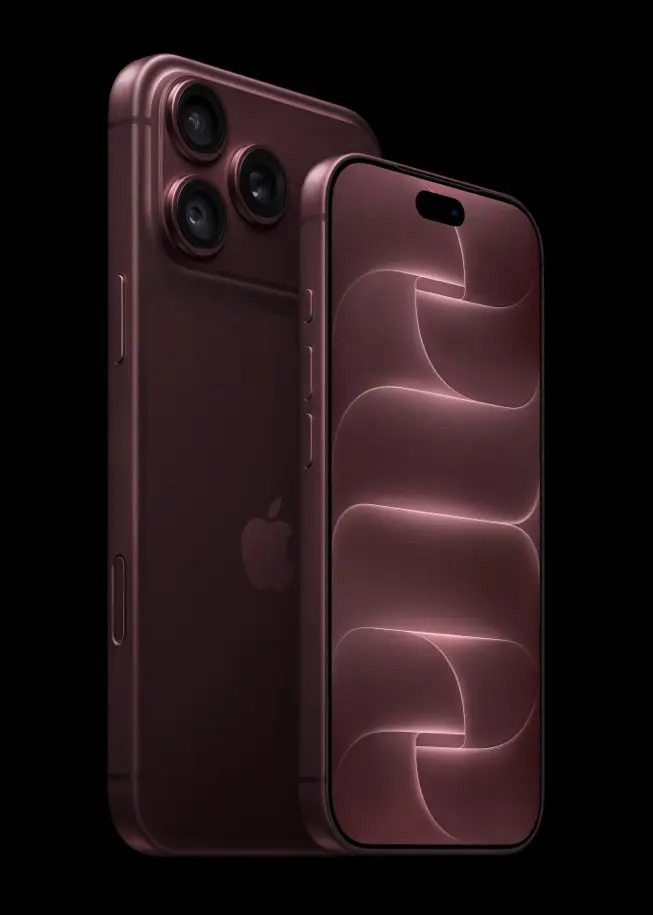
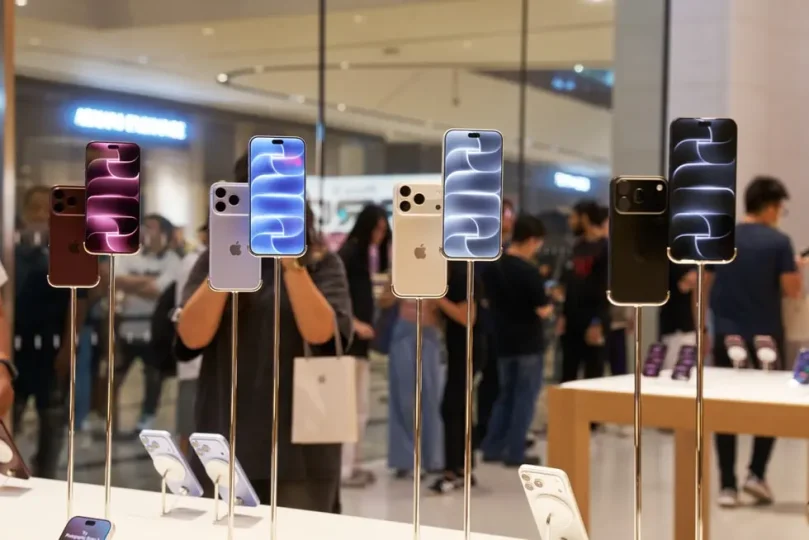
iPhone 18 Pro and iPhone 18 Pro Max reached stores in the first launch markets on Friday, September 18. Apple’s opening-day photographs provide the launch backdrop, but the buying decision depends on less glamorous details: a 48-megapixel variable-aperture main camera, the A20 Pro chip, revised cooling, longer claimed video playback and the practical limits of eSIM availability.
iPhone 18 Pro puts the camera first
The main Fusion camera uses six physical aperture blades to alter depth of field and the amount of light reaching the sensor. A wider opening can help in low light, while a narrower setting can keep more of a scene in focus. Pro controls add manual adjustment for aperture, shutter speed and white balance, together with a histogram.
Those controls make the phone more flexible, but they do not remove the limits of a small sensor or computational processing. Most owners will continue using automatic mode. Buyers should therefore judge shutter response, moving subjects, skin tones, stabilization and transitions between lenses, rather than purchasing only because the specification resembles a traditional camera.
A20 Pro and cooling target sustained workloads
A20 Pro is paired with a new vapor chamber intended to hold performance during video processing, gaming and other long tasks. A short benchmark peak is not the same as stable speed after twenty minutes. Temperature, power draw and performance throttling in independent tests will matter more than a single headline score.
Apple Intelligence and Siri features are part of the wider iOS 27 story, but availability can vary by language, region and device. A future software promise should not be the sole reason to upgrade. The camera, display, modem, battery behavior and support period should justify the phone even if a desired AI feature is unavailable in the buyer’s language.
Battery figures need context
Apple claims up to 36 hours of video playback for the Pro and up to 45 hours for the Pro Max. It also advertises a charge to 50 percent in about 15 minutes with the appropriate wired adapter. These are controlled scenarios, not a guarantee for every owner. Signal strength, brightness, navigation, camera use, games and background activity can change real-world endurance substantially.
Don’t miss this

Before replacing a recent model, check the existing battery’s health and actual daily drain. A battery service may restore useful life at a much lower cost when performance, storage and camera quality remain adequate. Heat is particularly important because it affects both short-term comfort and long-term battery aging.
eSIM and regional models require homework
Some markets receive eSIM-only hardware. Apple cites support from more than 500 carriers, but that does not mean every prepaid plan, business account or transfer process works identically. Importers should verify the exact model, supported radio bands, warranty coverage and activation path before paying.
Storage begins at 256GB and reaches 2TB. The highest capacities are useful for ProRes video and large local libraries, but many people benefit more from a reliable backup plan. The final budget should include a case, a suitable charger, local taxes and any service coverage instead of comparing only the advertised US starting price.
Who should consider upgrading
The clearest candidates are owners of older Pro models with a weak battery, insufficient storage or a camera that no longer meets their needs. Owners of last year’s model should compare specific gains rather than generation numbers. If manual controls, long gaming sessions and demanding video capture are not part of the routine, the difference may be smaller than the launch campaign suggests.
Apple lists US starting prices of $1,199 and $1,299, which do not represent every market’s taxes, exchange rates or warranty terms. The official iPhone 18 Pro announcement provides the specifications, while the related SajberSfera guide on iPhone battery care explains why charging habits and temperature remain important after purchase.
Independent camera and battery measurements are still the useful next step. iPhone 18 Pro appears to be a technically strong flagship, but the best purchase is the one that solves a real limitation without charging for features that will remain unused. Check local availability, service conditions and carrier support before treating launch-day specifications as a complete buying verdict.
Don’t miss this