
Apple iMac M6 specifications reveal a meaningful hardware update rather than a radical redesign. The new all-in-one desktop keeps its 24-inch 4.5K Retina display and seven-color lineup, while the M6 chip, faster storage, Wi-Fi 7 and improved local AI processing target users whose work has outgrown older Macs. The crucial detail for buyers is that the available configurations are not identical.
Apple announced the iMac on October 27, 2026. Preorders opened October 28, with retail availability scheduled for November 6. The starting US price is $1,499 for the 10-core CPU and 10-core GPU model, while the 12-core version starts at $1,699. Those are American prices, not verified prices for Serbia or every European market.
Apple iMac M6 specifications: performance and configurations
The base M6 configuration combines 10 CPU cores with 10 GPU cores. A higher-end option offers 12 of each, along with faster memory and more headroom for demanding creative workloads. Apple describes Neural Accelerators within GPU cores and a Dual 16-core Neural Engine, with memory bandwidth reaching up to 170GB/s. This architecture is designed to accelerate compatible on-device AI tools as well as conventional creative applications.
Apple reports up to twice the graphics performance and up to five times the performance in selected local AI tasks compared with the M4 iMac. These figures come from Apple’s own test scenarios. They should not be read as universal speed increases for web browsing, spreadsheets, photo exports or every local language model. Actual gains will depend on the chosen memory configuration, software and workload.
Owners of older Intel-based iMac systems are likely to see the clearest difference. Apple cites up to an 18-fold improvement against a popular Intel model in selected tests, but the comparison does not mean that every task will finish eighteen times faster. Users of a recent M4 iMac should look for independent benchmarks before replacing an otherwise capable computer.
Connectivity matters as much as the M6 chip
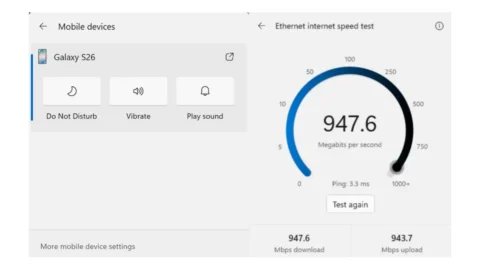
The 2026 iMac adds Wi-Fi 7 and Bluetooth 6. Selected configurations offer 2.5 Gigabit Ethernet, which can make a difference when transferring large video projects or working from network storage. Apple’s footnotes specify that the faster wired option belongs to the 12-core CPU and 12-core GPU configuration. Buyers should not assume it comes with the entry-level machine.
Apple also advertises up to twice the SSD read and write speed of the previous generation and as many as four Thunderbolt 4 ports. The iMac can drive up to two external 6K displays, providing room for editing timelines, preview monitors and additional tools. Exact ports, memory and storage should be checked against the selected model before purchase.

The familiar display remains a practical strength
The 24-inch 4.5K Retina display retains 500 nits of brightness and wide P3 color support. Apple includes a 12-megapixel Center Stage camera, Desk View for showing a workspace during calls, a six-speaker audio system and a three-microphone array. For a home office or small business, the main advantage is a tidy setup with a good display and integrated accessories rather than the need to buy a separate monitor.
Apple’s official announcement shows Final Cut Pro and other creative apps running on the new desktop. These are product demonstrations, not independent tests of sustained rendering speed or thermals. Video editors and developers should prioritize sufficient unified memory and storage before relying on the headline AI performance claims.
macOS 27 and Siri AI are not available equally everywhere
The iMac ships with macOS 27 and supports the next generation of Apple Intelligence. Apple highlights Siri AI, cross-app actions and contextual search, but some capabilities remain in beta and have explicit language and regional restrictions. Serbian is not listed among the supported Siri AI languages in the announcement. Buyers in Serbia should therefore avoid treating an English-language demo as a guarantee of local feature availability.
The new iMac is part of a broader year of Apple hardware changes. Our English-language coverage of the 2026 iPad mini examines another product aimed at users considering a device upgrade, although the iPad and iMac serve very different needs.
Who should upgrade to the M6 iMac?
The strongest case is for people moving from an aging Intel iMac or an early Apple silicon model, particularly if they edit video, process large photo libraries or run AI models locally. A recent M4 owner who mostly works in a browser may see limited everyday benefits. Before buying, compare CPU and GPU core counts, RAM, SSD capacity, Ethernet availability and local warranty terms.
Apple iMac M6 specifications make this a solid evolutionary update, but the final buying decision should rest on the configuration and price available in your country. Apple’s launch figures provide a useful starting point; independent reviews and confirmed local listings will determine the real value.