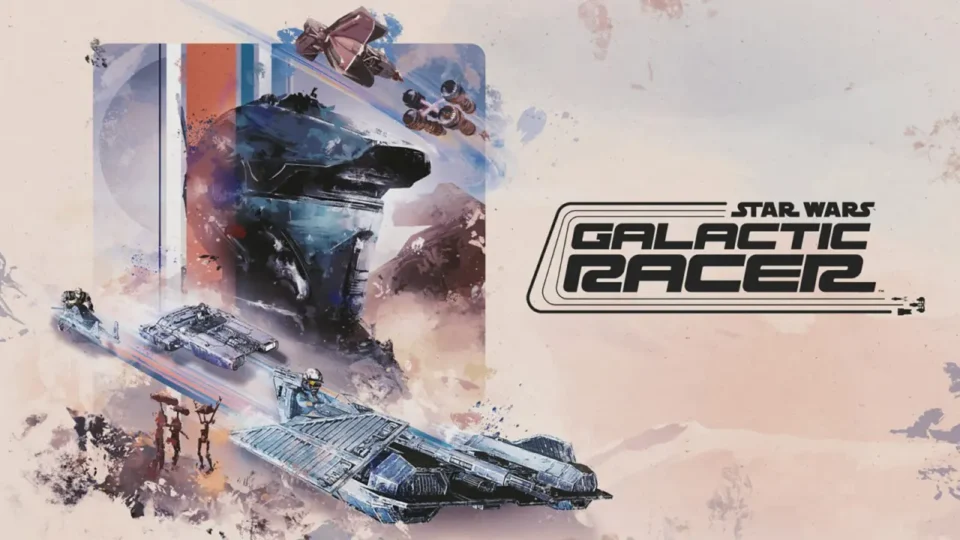
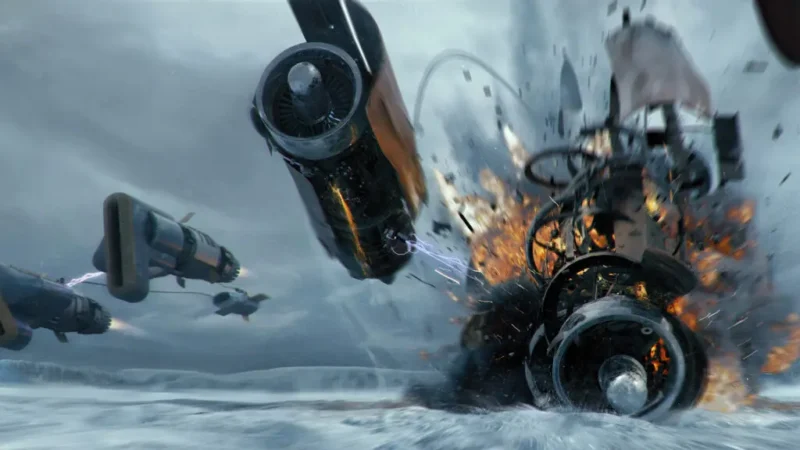
Star Wars Galactic Racer crashes are designed to change the race rather than merely trigger a short visual interruption. According to the official Xbox Wire explanation, contact can damage vehicles, alter handling and force players to manage risk across a run. The game combines arcade speed with consequences that carry into later events.
The title is available now, and the published description covers four vehicle categories: skim speeders, speeder bikes, landspeeders and podracers. Each class has a different balance of mass, speed and control. That variety matters because a collision that barely moves one machine may send a lighter rival off line.
Star Wars Galactic Racer crashes and consequences
The development team says it wanted crashes to feel specific to the vehicles involved. Camera work, debris and recovery are assembled from reusable pieces so the result can look cinematic without replaying one identical sequence. The goal is to preserve the sense of impact while returning the player to control quickly enough for a racing game.
Damage also has a tactical role. A vehicle that survives contact may continue with weaker performance or require a different approach to the next section. Players therefore have to decide when an aggressive overtake is worth the risk, especially near the end of a run where one mistake can erase earlier progress.
How runs-based progression changes racing
Galactic Racer uses a runs-based structure rather than a single fixed championship path. During a tour, players collect temporary statistics, parts and abilities, while longer-term progression remains available outside the current run. A final knockout event puts the accumulated build under pressure.
This structure can make repeated races feel different even when tracks are familiar. It also raises balance questions. Temporary upgrades need to create meaningful choices without making an early lucky reward decide the entire tour. The official article explains the intent but does not provide enough long-term data to judge difficulty scaling or competitive fairness.
Don’t miss this

Four vehicle classes, four collision profiles
Podracers suggest high speed and wide mechanical profiles, while speeder bikes trade protection for agility. Landspeeders and skim speeders occupy different middle ground. If the physics communicate weight clearly, players can read a rival’s threat before committing to contact. If not, spectacular crashes could feel arbitrary.
The best test will be consistency. Similar impacts should produce understandable results, and recovery time should match the severity of the mistake. Multiplayer adds another requirement: network latency must not turn close racing into contact that appears differently for each player.
What to check before buying
- Look for performance reports on the exact console or PC configuration you use.
- Check accessibility settings for camera shake, readable interface elements and audio cues.
- Confirm whether progression and online modes match the way you prefer to play.
- Watch unedited gameplay to see how often crash sequences interrupt control.
For another recent MMO and progression announcement, read SajberSfera’s RuneFest 2026 overview of the fourth RuneScape MMO. It is a different genre, but the same rule applies: separate confirmed systems from features that remain to be evaluated in extended play.
The official Xbox Wire feature explains the crash cameras, vehicle behavior and risk across a tour. It is a developer-led presentation, not an independent review, so claims about feel, balance and replay value should remain provisional until broader testing is available.
Why the system could work
Arcade racers need immediate feedback. A successful system makes players understand why contact happened, what it cost and how to avoid repeating the mistake. Star Wars Galactic Racer crashes could add tension because the consequence is connected to vehicle condition and tour progress, not only to a reset animation.
Presentation must not hide information. Strong sound cues, a readable damage state and options to reduce repeated camera movement would help more players follow fast changes. The Xbox Wire article does not list every accessibility option, so buyers should check the final menus and official support documentation.
Don’t miss this
On paper, the combination of four distinct vehicle classes, procedural crash presentation and runs-based stakes gives the game a recognizable identity. Its quality will depend on predictable physics, fair recovery and enough variety to keep the risk interesting after many tours. Those are questions that only sustained play can answer.